Buy myadpack.eu ?
We are moving the project
myadpack.eu .
Are you interested in purchasing the domain
myadpack.eu ?
domain@kv-gmbh.de · 0541-91531010
Buy myadpack.eu ?
What is an associative inhibition?
Associative inhibition is a psychological phenomenon where the learning of a new association between two stimuli is hindered by the presence of a previously learned association. This occurs when the two stimuli are presented together, but the individual has learned to associate one of the stimuli with a different response. As a result, the individual struggles to form a new association between the two stimuli. Associative inhibition is a form of interference that can impact the learning and memory processes. **
What is an associative anaphora?
An associative anaphora is a linguistic phenomenon where a word or phrase in a sentence refers back to a previously mentioned concept or idea, rather than a specific noun or pronoun. This type of anaphora creates a connection between different parts of a text by linking related concepts together. Associative anaphora is often used to maintain coherence and cohesion in a discourse, helping to guide the reader or listener through the flow of information. **


Similar search terms for Associative
Top-Angebote
Products related to Associative:
-
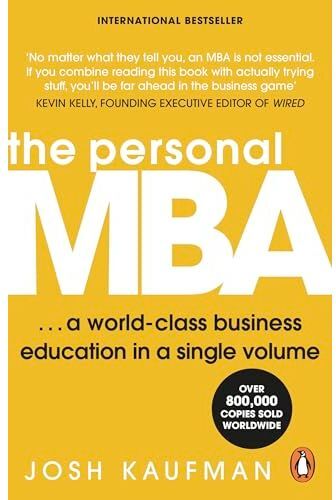
Penguin The Personal MBA: The bestselling business book containing you everything you need to know about marketing, management and leadershipARE YOU TEMPTED TO GO TO BUSINESS SCHOOL? SAVE YOUR MONEY AND READ THE PERSONAL MBA INSTEAD. This bestselling business classic gives you everything you need to transform your business and your career. An MBA at a top business school is an enormous investment in time and cash. And if you don't want to work for a consulting firm or an investment bank, the chances are it simply isn't worth it. The Personal MBA gives you simple mental models for every subject that's key to commercial success. From the basics of products and marketing to the nuances of teamwork and systems, this book distils everything you need to know to take on the MBA graduates and win.10,99 £*Shipping: 2,99 £Secure redirect to the provider
-
Inspired Finds 4.72in Mini 3D Hologram Fan USB Advertising Display Light 4.72in Mini 3D Hologram Fan USB Advertising Display LightTurn any counter, shelf, or event table into an attentiongrabbing display with this mini 3D hologram fan. Designed to create floatingstyle visuals with a compact spinning LED setup, it adds a futuristic look that feels far more exciting than an...93,99 $*Shipping: 0,00 $Secure redirect to the provider
-
Various Publishers Day Trading Attention & Dare to Lead by Gary Vaynerchuk & Brené Brown - 2 Book Set - Mixed Format - Marketing & Leadership Business BooksThis two-book bundle pairs Gary Vaynerchuk's Day Trading Attention and Brené Brown's Dare to Lead. Day Trading Attention sharpens your social media marketing instincts for a fast-changing digital landscape, while Dare to Lead builds courageous leadership skills for guiding teams through uncertainty. Together they offer a rounded toolkit for anyone building a brand, a business, or a career, blending practical marketing tactics with research-backed leadership insight. The books are in a mixed format, consisting of hardback and paperback editions, and are brand new.11,99 £*Shipping: 2,99 £Secure redirect to the provider
-
Various Publishers 22 Immutable Laws Branding, Marketing & Positioning 3 Book Set by Al Ries, Jack Trout & Laura Ries - Paperback Business Strategy ClassicsThis three-book paperback set brings together three influential marketing texts written by Al Ries alongside collaborators Jack Trout and Laura Ries. The collection distils decades of branding and marketing strategy into short, memorable 'laws' and case studies. The set includes The 22 Immutable Laws of Branding, The 22 Immutable Laws of Marketing, and Positioning: The Battle for Your Mind. Ideal for business students, entrepreneurs, marketers, and anyone building a brand, it's a practical, portable reference library that has shaped how the modern business world thinks about positioning, branding, and market leadership.28,99 £*Shipping: 2,99 £Secure redirect to the provider



-
What is the associative property used for?
The associative property is used to change the grouping of numbers in an operation without changing the result. This property is commonly used in addition and multiplication, where the order of the numbers being added or multiplied can be rearranged without affecting the final outcome. The associative property helps simplify calculations and allows for easier mental math computations. **
-
What is the associative law for 4 elements?
The associative law for 4 elements states that for any elements a, b, c, and d, the order in which we group them in a binary operation does not affect the result. In other words, (a * b) * (c * d) = a * (b * c) * d = a * b * c * d. This property holds true for any operation that is associative, such as addition or multiplication. **
-
What is the purpose of the associative property?
The purpose of the associative property is to show that the grouping of numbers in an operation does not affect the outcome. In other words, it demonstrates that the order in which numbers are grouped when adding or multiplying does not change the result. This property is helpful in simplifying calculations and allows for more efficient problem-solving by rearranging the numbers in a way that is easier to work with. **
-
What does the associative law state for matrices?
The associative law for matrices states that when multiplying three matrices together, the order in which the matrices are multiplied does not affect the final result. In other words, for matrices A, B, and C, (A*B)*C = A*(B*C). This property allows us to group matrices in different ways when performing matrix multiplication without changing the outcome. **


How do you derive the non-associative multiplication?
Non-associative multiplication is derived by defining a binary operation that combines two elements of a set to produce a third element. This operation does not follow the associative property, meaning that the order of operations matters. Non-associative multiplication can be defined by specifying the result of multiplying any two elements in the set. This can be represented using a multiplication table or by explicitly stating the result of each pair of elements. The non-associative multiplication operation can then be used to perform calculations within the set, taking into account the specific rules for combining elements. **
How do I recognize associative series and climax?
Associative series is recognized by a series of words, phrases, or clauses that are similar in structure and length, creating a sense of rhythm and repetition. This repetition helps to emphasize the ideas being presented. On the other hand, climax is recognized by a series of words, phrases, or clauses that are arranged in order of increasing importance or intensity, building up to a powerful conclusion. Both techniques can be identified by paying attention to the pattern and progression of the words and phrases used in a sentence or passage. **
Top-Angebote
Products related to Associative:
-
No Marketing Systems Wood Corner Desk"The corner desk measures 42"" X 28"" X 30"" And Weighs 42 lbs. Arrives with only minimal Assembly required. Comfortably fitting in any home, studio, apartment, and office, The small corner writing desk maximizes space in compact rooms."257,04 $*Shipping: 0,00 $Secure redirect to the provider
-
Uplift Essentials Elegant Business Digital Wristwatch silverThe Elegant Business Digital Wristwatch is a sophisticated take on the classic electronic timepiece, designed for those who appreciate the precision of a digital display with the refined look of a luxury accessory. Featuring a polished stainless...34,97 $*Shipping: 0,00 $Secure redirect to the provider
-
Penguin The Personal MBA: The bestselling business book containing you everything you need to know about marketing, management and leadershipARE YOU TEMPTED TO GO TO BUSINESS SCHOOL? SAVE YOUR MONEY AND READ THE PERSONAL MBA INSTEAD. This bestselling business classic gives you everything you need to transform your business and your career. An MBA at a top business school is an enormous investment in time and cash. And if you don't want to work for a consulting firm or an investment bank, the chances are it simply isn't worth it. The Personal MBA gives you simple mental models for every subject that's key to commercial success. From the basics of products and marketing to the nuances of teamwork and systems, this book distils everything you need to know to take on the MBA graduates and win.10,99 £*Shipping: 2,99 £Secure redirect to the provider
-
Inspired Finds 4.72in Mini 3D Hologram Fan USB Advertising Display Light 4.72in Mini 3D Hologram Fan USB Advertising Display LightTurn any counter, shelf, or event table into an attentiongrabbing display with this mini 3D hologram fan. Designed to create floatingstyle visuals with a compact spinning LED setup, it adds a futuristic look that feels far more exciting than an...93,99 $*Shipping: 0,00 $Secure redirect to the provider
-
What is an associative inhibition?
Associative inhibition is a psychological phenomenon where the learning of a new association between two stimuli is hindered by the presence of a previously learned association. This occurs when the two stimuli are presented together, but the individual has learned to associate one of the stimuli with a different response. As a result, the individual struggles to form a new association between the two stimuli. Associative inhibition is a form of interference that can impact the learning and memory processes. **
-
What is an associative anaphora?
An associative anaphora is a linguistic phenomenon where a word or phrase in a sentence refers back to a previously mentioned concept or idea, rather than a specific noun or pronoun. This type of anaphora creates a connection between different parts of a text by linking related concepts together. Associative anaphora is often used to maintain coherence and cohesion in a discourse, helping to guide the reader or listener through the flow of information. **
-
What is the associative property used for?
The associative property is used to change the grouping of numbers in an operation without changing the result. This property is commonly used in addition and multiplication, where the order of the numbers being added or multiplied can be rearranged without affecting the final outcome. The associative property helps simplify calculations and allows for easier mental math computations. **
-
What is the associative law for 4 elements?
The associative law for 4 elements states that for any elements a, b, c, and d, the order in which we group them in a binary operation does not affect the result. In other words, (a * b) * (c * d) = a * (b * c) * d = a * b * c * d. This property holds true for any operation that is associative, such as addition or multiplication. **
Similar search terms for Associative
-
Various Publishers Day Trading Attention & Dare to Lead by Gary Vaynerchuk & Brené Brown - 2 Book Set - Mixed Format - Marketing & Leadership Business BooksThis two-book bundle pairs Gary Vaynerchuk's Day Trading Attention and Brené Brown's Dare to Lead. Day Trading Attention sharpens your social media marketing instincts for a fast-changing digital landscape, while Dare to Lead builds courageous leadership skills for guiding teams through uncertainty. Together they offer a rounded toolkit for anyone building a brand, a business, or a career, blending practical marketing tactics with research-backed leadership insight. The books are in a mixed format, consisting of hardback and paperback editions, and are brand new.11,99 £*Shipping: 2,99 £Secure redirect to the provider
-
Various Publishers 22 Immutable Laws Branding, Marketing & Positioning 3 Book Set by Al Ries, Jack Trout & Laura Ries - Paperback Business Strategy ClassicsThis three-book paperback set brings together three influential marketing texts written by Al Ries alongside collaborators Jack Trout and Laura Ries. The collection distils decades of branding and marketing strategy into short, memorable 'laws' and case studies. The set includes The 22 Immutable Laws of Branding, The 22 Immutable Laws of Marketing, and Positioning: The Battle for Your Mind. Ideal for business students, entrepreneurs, marketers, and anyone building a brand, it's a practical, portable reference library that has shaped how the modern business world thinks about positioning, branding, and market leadership.28,99 £*Shipping: 2,99 £Secure redirect to the provider
-
Drop Dash Deals Waterproof Double Sided LED Advertising Light Box Illuminated Sign Board Waterproof Double Sided LED Advertising Light Box Illuminated Sign BoardStep into a brighter way to show off your brand with this premium 1 pc of LED advertising light box that instantly elevates visibility day and night. Designed for business owners, shopkeepers, and event promoters who want their message seen, its...229,97 $*Shipping: 0,00 $Secure redirect to the provider
-
Uplift Essentials Elegant Business Digital Wristwatch goldThe Elegant Business Digital Wristwatch is a sophisticated take on the classic electronic timepiece, designed for those who appreciate the precision of a digital display with the refined look of a luxury accessory. Featuring a polished stainless...34,97 $*Shipping: 0,00 $Secure redirect to the provider
-
What is the purpose of the associative property?
The purpose of the associative property is to show that the grouping of numbers in an operation does not affect the outcome. In other words, it demonstrates that the order in which numbers are grouped when adding or multiplying does not change the result. This property is helpful in simplifying calculations and allows for more efficient problem-solving by rearranging the numbers in a way that is easier to work with. **
-
What does the associative law state for matrices?
The associative law for matrices states that when multiplying three matrices together, the order in which the matrices are multiplied does not affect the final result. In other words, for matrices A, B, and C, (A*B)*C = A*(B*C). This property allows us to group matrices in different ways when performing matrix multiplication without changing the outcome. **
-
How do you derive the non-associative multiplication?
Non-associative multiplication is derived by defining a binary operation that combines two elements of a set to produce a third element. This operation does not follow the associative property, meaning that the order of operations matters. Non-associative multiplication can be defined by specifying the result of multiplying any two elements in the set. This can be represented using a multiplication table or by explicitly stating the result of each pair of elements. The non-associative multiplication operation can then be used to perform calculations within the set, taking into account the specific rules for combining elements. **
-
How do I recognize associative series and climax?
Associative series is recognized by a series of words, phrases, or clauses that are similar in structure and length, creating a sense of rhythm and repetition. This repetition helps to emphasize the ideas being presented. On the other hand, climax is recognized by a series of words, phrases, or clauses that are arranged in order of increasing importance or intensity, building up to a powerful conclusion. Both techniques can be identified by paying attention to the pattern and progression of the words and phrases used in a sentence or passage. **
* All prices are inclusive of VAT and, if applicable, plus shipping costs. The offer information is based on the details provided by the respective shop and is updated through automated processes. Real-time updates do not occur, so deviations can occur in individual cases. ** Note: Parts of this content were created by AI.