Buy myadpack.eu ?
We are moving the project
myadpack.eu .
Are you interested in purchasing the domain
myadpack.eu ?
domain@kv-gmbh.de · 0541-91531010
Buy myadpack.eu ?
What does rationalism mean?
Rationalism is a philosophical belief that emphasizes the role of reason and logic in understanding the world. It holds that knowledge is primarily derived from reason and intellectual processes, rather than from sensory experience or religious faith. Rationalists believe that certain truths can be known a priori, or independently of experience, through the use of reason. This approach to knowledge contrasts with empiricism, which emphasizes the importance of sensory experience in acquiring knowledge. **
What is critical rationalism?
Critical rationalism is a philosophical approach that emphasizes the importance of critical thinking and skepticism in the pursuit of knowledge. It was developed by philosopher Karl Popper and is based on the idea that knowledge can never be fully justified or proven, but can only be tested and criticized. Critical rationalism encourages the constant questioning and testing of theories and beliefs, and rejects the notion of absolute truth. It also emphasizes the importance of openness to new ideas and the willingness to revise or abandon theories in the face of new evidence. **

Similar search terms for Rationalism
Top-Angebote
Products related to Rationalism:
-
Uplift Essentials Elegant Business Digital Wristwatch blackThe Elegant Business Digital Wristwatch is a sophisticated take on the classic electronic timepiece, designed for those who appreciate the precision of a digital display with the refined look of a luxury accessory. Featuring a polished stainless...34,97 $*Shipping: 0,00 $Secure redirect to the provider
-
Various Publishers Day Trading Attention & Dare to Lead by Gary Vaynerchuk & Brené Brown - 2 Book Set - Mixed Format - Marketing & Leadership Business BooksThis two-book bundle pairs Gary Vaynerchuk's Day Trading Attention and Brené Brown's Dare to Lead. Day Trading Attention sharpens your social media marketing instincts for a fast-changing digital landscape, while Dare to Lead builds courageous leadership skills for guiding teams through uncertainty. Together they offer a rounded toolkit for anyone building a brand, a business, or a career, blending practical marketing tactics with research-backed leadership insight. The books are in a mixed format, consisting of hardback and paperback editions, and are brand new.11,99 £*Shipping: 2,99 £Secure redirect to the provider
-
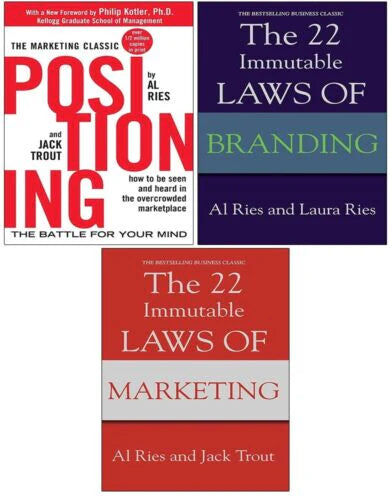
Various Publishers 22 Immutable Laws Branding, Marketing & Positioning 3 Book Set by Al Ries, Jack Trout & Laura Ries - Paperback Business Strategy ClassicsThis three-book paperback set brings together three influential marketing texts written by Al Ries alongside collaborators Jack Trout and Laura Ries. The collection distils decades of branding and marketing strategy into short, memorable 'laws' and case studies. The set includes The 22 Immutable Laws of Branding, The 22 Immutable Laws of Marketing, and Positioning: The Battle for Your Mind. Ideal for business students, entrepreneurs, marketers, and anyone building a brand, it's a practical, portable reference library that has shaped how the modern business world thinks about positioning, branding, and market leadership.28,99 £*Shipping: 2,99 £Secure redirect to the provider
-
Inspired Finds 4.72in Mini 3D Hologram Fan USB Advertising Display Light 4.72in Mini 3D Hologram Fan USB Advertising Display LightTurn any counter, shelf, or event table into an attentiongrabbing display with this mini 3D hologram fan. Designed to create floatingstyle visuals with a compact spinning LED setup, it adds a futuristic look that feels far more exciting than an...93,99 $*Shipping: 0,00 $Secure redirect to the provider



-
What is critical rationalism 2?
Critical rationalism 2 is an extension of the original critical rationalism philosophy developed by Karl Popper. It emphasizes the importance of critical thinking and skepticism in the pursuit of knowledge. This approach encourages individuals to actively seek out and challenge their own beliefs and assumptions, as well as those of others, in order to continually refine and improve their understanding of the world. Critical rationalism 2 also emphasizes the role of conjectures and refutations in the development of knowledge, and the recognition that all knowledge is fallible and subject to revision in light of new evidence. **
-
Would you prefer rationalism or empiricism?
As an AI language model, I do not have personal preferences. However, both rationalism and empiricism have their strengths and weaknesses. Rationalism emphasizes the role of reason and innate ideas in acquiring knowledge, while empiricism focuses on the importance of sensory experience and observation. Both approaches have contributed to our understanding of the world, and a balanced approach that incorporates elements of both rationalism and empiricism may be the most effective way to gain knowledge and understanding. **
-
How did Kant unite empiricism and rationalism?
Kant united empiricism and rationalism by proposing that both are necessary for a complete understanding of the world. He argued that our knowledge begins with sensory experience (empiricism), but it is then shaped and organized by our innate mental structures and concepts (rationalism). According to Kant, our minds actively construct our experience of the world by organizing sensory data according to certain a priori categories, such as space, time, and causality. This synthesis of empirical data and rational concepts allows us to have a more comprehensive understanding of the world. **
-
What is the difference between skepticism and rationalism?
Skepticism is the questioning of knowledge and beliefs, often doubting the certainty of truth claims and requiring evidence or justification for beliefs. Rationalism, on the other hand, is the belief that reason and logic are the primary sources of knowledge and justification for beliefs. While skepticism focuses on questioning and doubting beliefs, rationalism emphasizes the importance of reason and logical thinking in forming beliefs and understanding the world. **


What is the difference between empiricism and rationalism?
Empiricism is the belief that knowledge comes primarily from sensory experience and observation of the external world. Rationalism, on the other hand, is the belief that knowledge comes primarily from reason and logic. Empiricists rely on evidence and experimentation to support their beliefs, while rationalists prioritize deductive reasoning and innate ideas. In essence, empiricism emphasizes the importance of experience, while rationalism emphasizes the importance of reason. **
What is your opinion on René Descartes' rationalism?
I believe that René Descartes' rationalism is a valuable philosophical approach that emphasizes the power of human reason and logic in understanding the world. Descartes' method of doubt and his famous statement "I think, therefore I am" laid the foundation for modern philosophy and the scientific method. While some may criticize his reliance on reason over sensory experience, I think Descartes' rationalism has greatly contributed to the development of critical thinking and skepticism in philosophical inquiry. **
Top-Angebote
Products related to Rationalism:
-
No Marketing Systems Wood Corner Desk"The corner desk measures 42"" X 28"" X 30"" And Weighs 42 lbs. Arrives with only minimal Assembly required. Comfortably fitting in any home, studio, apartment, and office, The small corner writing desk maximizes space in compact rooms."257,04 $*Shipping: 0,00 $Secure redirect to the provider
-
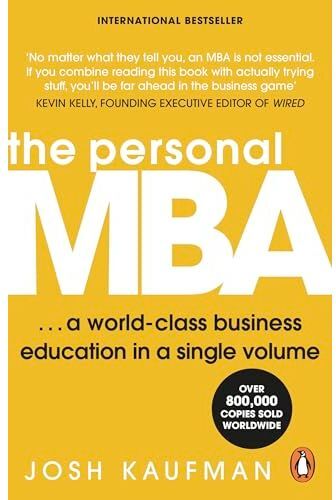
Penguin The Personal MBA: The bestselling business book containing you everything you need to know about marketing, management and leadershipARE YOU TEMPTED TO GO TO BUSINESS SCHOOL? SAVE YOUR MONEY AND READ THE PERSONAL MBA INSTEAD. This bestselling business classic gives you everything you need to transform your business and your career. An MBA at a top business school is an enormous investment in time and cash. And if you don't want to work for a consulting firm or an investment bank, the chances are it simply isn't worth it. The Personal MBA gives you simple mental models for every subject that's key to commercial success. From the basics of products and marketing to the nuances of teamwork and systems, this book distils everything you need to know to take on the MBA graduates and win.10,99 £*Shipping: 2,99 £Secure redirect to the provider
-
Uplift Essentials Elegant Business Digital Wristwatch blackThe Elegant Business Digital Wristwatch is a sophisticated take on the classic electronic timepiece, designed for those who appreciate the precision of a digital display with the refined look of a luxury accessory. Featuring a polished stainless...34,97 $*Shipping: 0,00 $Secure redirect to the provider
-
Various Publishers Day Trading Attention & Dare to Lead by Gary Vaynerchuk & Brené Brown - 2 Book Set - Mixed Format - Marketing & Leadership Business BooksThis two-book bundle pairs Gary Vaynerchuk's Day Trading Attention and Brené Brown's Dare to Lead. Day Trading Attention sharpens your social media marketing instincts for a fast-changing digital landscape, while Dare to Lead builds courageous leadership skills for guiding teams through uncertainty. Together they offer a rounded toolkit for anyone building a brand, a business, or a career, blending practical marketing tactics with research-backed leadership insight. The books are in a mixed format, consisting of hardback and paperback editions, and are brand new.11,99 £*Shipping: 2,99 £Secure redirect to the provider
-
What does rationalism mean?
Rationalism is a philosophical belief that emphasizes the role of reason and logic in understanding the world. It holds that knowledge is primarily derived from reason and intellectual processes, rather than from sensory experience or religious faith. Rationalists believe that certain truths can be known a priori, or independently of experience, through the use of reason. This approach to knowledge contrasts with empiricism, which emphasizes the importance of sensory experience in acquiring knowledge. **
-
What is critical rationalism?
Critical rationalism is a philosophical approach that emphasizes the importance of critical thinking and skepticism in the pursuit of knowledge. It was developed by philosopher Karl Popper and is based on the idea that knowledge can never be fully justified or proven, but can only be tested and criticized. Critical rationalism encourages the constant questioning and testing of theories and beliefs, and rejects the notion of absolute truth. It also emphasizes the importance of openness to new ideas and the willingness to revise or abandon theories in the face of new evidence. **
-
What is critical rationalism 2?
Critical rationalism 2 is an extension of the original critical rationalism philosophy developed by Karl Popper. It emphasizes the importance of critical thinking and skepticism in the pursuit of knowledge. This approach encourages individuals to actively seek out and challenge their own beliefs and assumptions, as well as those of others, in order to continually refine and improve their understanding of the world. Critical rationalism 2 also emphasizes the role of conjectures and refutations in the development of knowledge, and the recognition that all knowledge is fallible and subject to revision in light of new evidence. **
-
Would you prefer rationalism or empiricism?
As an AI language model, I do not have personal preferences. However, both rationalism and empiricism have their strengths and weaknesses. Rationalism emphasizes the role of reason and innate ideas in acquiring knowledge, while empiricism focuses on the importance of sensory experience and observation. Both approaches have contributed to our understanding of the world, and a balanced approach that incorporates elements of both rationalism and empiricism may be the most effective way to gain knowledge and understanding. **
Similar search terms for Rationalism
-
Various Publishers 22 Immutable Laws Branding, Marketing & Positioning 3 Book Set by Al Ries, Jack Trout & Laura Ries - Paperback Business Strategy ClassicsThis three-book paperback set brings together three influential marketing texts written by Al Ries alongside collaborators Jack Trout and Laura Ries. The collection distils decades of branding and marketing strategy into short, memorable 'laws' and case studies. The set includes The 22 Immutable Laws of Branding, The 22 Immutable Laws of Marketing, and Positioning: The Battle for Your Mind. Ideal for business students, entrepreneurs, marketers, and anyone building a brand, it's a practical, portable reference library that has shaped how the modern business world thinks about positioning, branding, and market leadership.28,99 £*Shipping: 2,99 £Secure redirect to the provider
-
Inspired Finds 4.72in Mini 3D Hologram Fan USB Advertising Display Light 4.72in Mini 3D Hologram Fan USB Advertising Display LightTurn any counter, shelf, or event table into an attentiongrabbing display with this mini 3D hologram fan. Designed to create floatingstyle visuals with a compact spinning LED setup, it adds a futuristic look that feels far more exciting than an...93,99 $*Shipping: 0,00 $Secure redirect to the provider
-
Drop Dash Deals Waterproof Double Sided LED Advertising Light Box Illuminated Sign Board Waterproof Double Sided LED Advertising Light Box Illuminated Sign BoardStep into a brighter way to show off your brand with this premium 1 pc of LED advertising light box that instantly elevates visibility day and night. Designed for business owners, shopkeepers, and event promoters who want their message seen, its...229,97 $*Shipping: 0,00 $Secure redirect to the provider
-
Uplift Essentials Elegant Business Digital Wristwatch goldThe Elegant Business Digital Wristwatch is a sophisticated take on the classic electronic timepiece, designed for those who appreciate the precision of a digital display with the refined look of a luxury accessory. Featuring a polished stainless...34,97 $*Shipping: 0,00 $Secure redirect to the provider
-
How did Kant unite empiricism and rationalism?
Kant united empiricism and rationalism by proposing that both are necessary for a complete understanding of the world. He argued that our knowledge begins with sensory experience (empiricism), but it is then shaped and organized by our innate mental structures and concepts (rationalism). According to Kant, our minds actively construct our experience of the world by organizing sensory data according to certain a priori categories, such as space, time, and causality. This synthesis of empirical data and rational concepts allows us to have a more comprehensive understanding of the world. **
-
What is the difference between skepticism and rationalism?
Skepticism is the questioning of knowledge and beliefs, often doubting the certainty of truth claims and requiring evidence or justification for beliefs. Rationalism, on the other hand, is the belief that reason and logic are the primary sources of knowledge and justification for beliefs. While skepticism focuses on questioning and doubting beliefs, rationalism emphasizes the importance of reason and logical thinking in forming beliefs and understanding the world. **
-
What is the difference between empiricism and rationalism?
Empiricism is the belief that knowledge comes primarily from sensory experience and observation of the external world. Rationalism, on the other hand, is the belief that knowledge comes primarily from reason and logic. Empiricists rely on evidence and experimentation to support their beliefs, while rationalists prioritize deductive reasoning and innate ideas. In essence, empiricism emphasizes the importance of experience, while rationalism emphasizes the importance of reason. **
-
What is your opinion on René Descartes' rationalism?
I believe that René Descartes' rationalism is a valuable philosophical approach that emphasizes the power of human reason and logic in understanding the world. Descartes' method of doubt and his famous statement "I think, therefore I am" laid the foundation for modern philosophy and the scientific method. While some may criticize his reliance on reason over sensory experience, I think Descartes' rationalism has greatly contributed to the development of critical thinking and skepticism in philosophical inquiry. **
* All prices are inclusive of VAT and, if applicable, plus shipping costs. The offer information is based on the details provided by the respective shop and is updated through automated processes. Real-time updates do not occur, so deviations can occur in individual cases. ** Note: Parts of this content were created by AI.