Buy myadpack.eu ?
We are moving the project
myadpack.eu .
Are you interested in purchasing the domain
myadpack.eu ?
domain@kv-gmbh.de · 0541-91531010
Buy myadpack.eu ?
How do you calculate the braking distance, the braking process, and the braking deceleration?
The braking distance can be calculated using the formula: braking distance = (initial velocity^2) / (2 * deceleration), where the deceleration is the rate at which the vehicle slows down. The braking process involves the driver applying the brakes, which causes friction between the brake pads and the wheels, leading to a decrease in the vehicle's speed. The braking deceleration can be calculated by dividing the change in velocity by the time it takes for the vehicle to come to a complete stop. **
How do you calculate the braking time and braking distance?
Braking time and braking distance can be calculated using the formula: Braking distance = (initial velocity^2) / (2 * deceleration) Where initial velocity is the speed of the vehicle before braking, and deceleration is the rate at which the vehicle slows down. Braking time can be calculated by dividing the braking distance by the initial velocity. These calculations are based on the assumption of constant deceleration, and may vary depending on factors such as road conditions and the vehicle's braking system. **
Similar search terms for Braking
Top-Angebote
Products related to Braking:
-
Uplift Essentials Elegant Business Digital Wristwatch blackThe Elegant Business Digital Wristwatch is a sophisticated take on the classic electronic timepiece, designed for those who appreciate the precision of a digital display with the refined look of a luxury accessory. Featuring a polished stainless...34,97 $*Shipping: 0,00 $Secure redirect to the provider
-
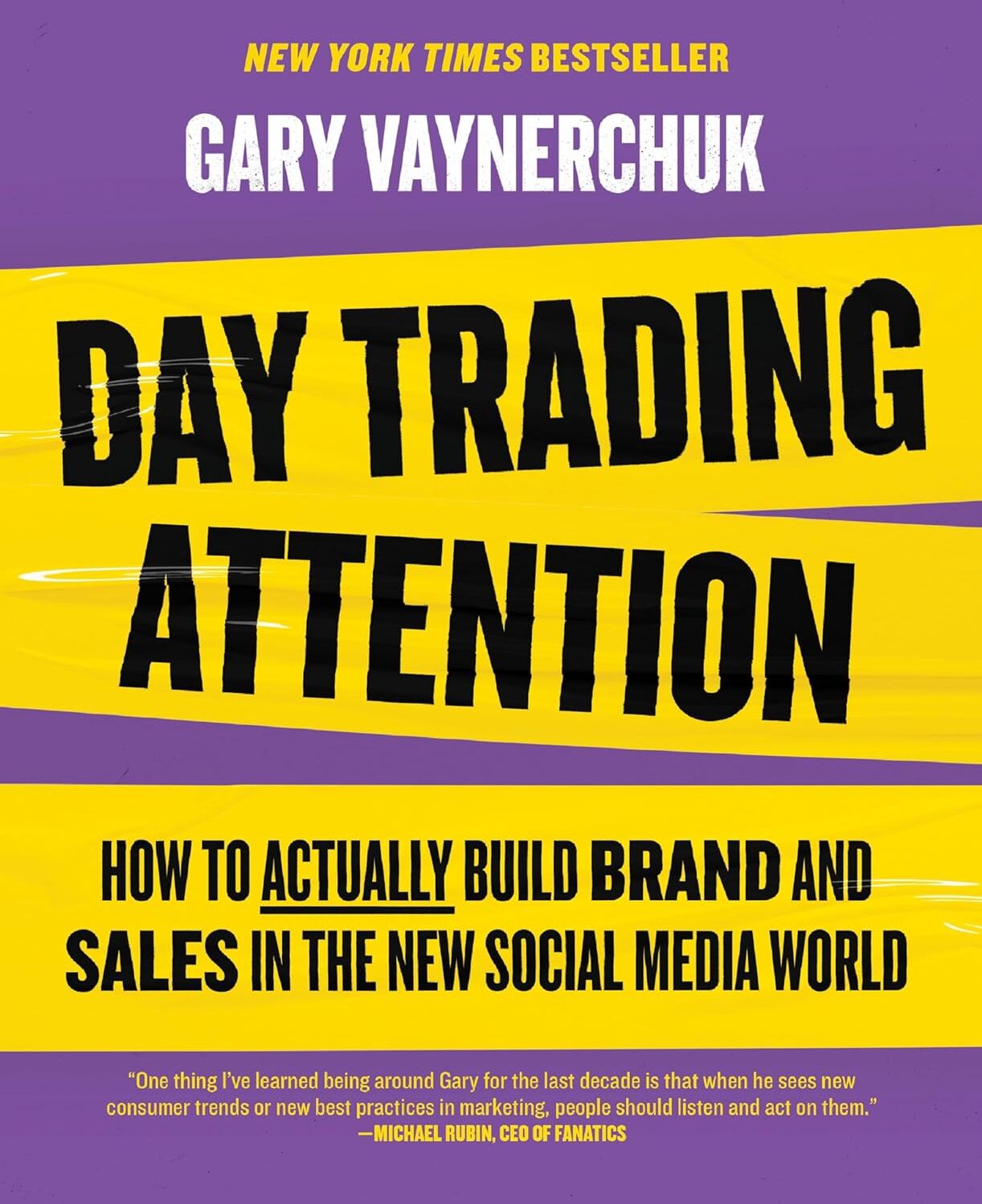
Various Publishers Day Trading Attention & Dare to Lead by Gary Vaynerchuk & Brené Brown - 2 Book Set - Mixed Format - Marketing & Leadership Business BooksThis two-book bundle pairs Gary Vaynerchuk's Day Trading Attention and Brené Brown's Dare to Lead. Day Trading Attention sharpens your social media marketing instincts for a fast-changing digital landscape, while Dare to Lead builds courageous leadership skills for guiding teams through uncertainty. Together they offer a rounded toolkit for anyone building a brand, a business, or a career, blending practical marketing tactics with research-backed leadership insight. The books are in a mixed format, consisting of hardback and paperback editions, and are brand new.11,99 £*Shipping: 2,99 £Secure redirect to the provider
-
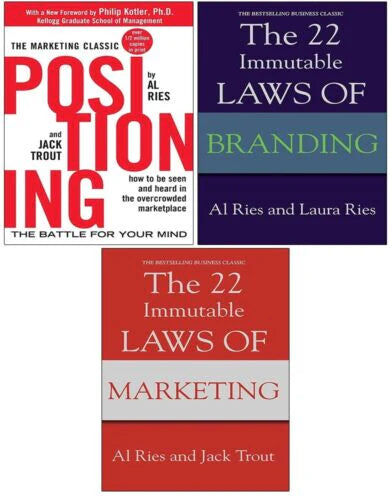
Various Publishers 22 Immutable Laws Branding, Marketing & Positioning 3 Book Set by Al Ries, Jack Trout & Laura Ries - Paperback Business Strategy ClassicsThis three-book paperback set brings together three influential marketing texts written by Al Ries alongside collaborators Jack Trout and Laura Ries. The collection distils decades of branding and marketing strategy into short, memorable 'laws' and case studies. The set includes The 22 Immutable Laws of Branding, The 22 Immutable Laws of Marketing, and Positioning: The Battle for Your Mind. Ideal for business students, entrepreneurs, marketers, and anyone building a brand, it's a practical, portable reference library that has shaped how the modern business world thinks about positioning, branding, and market leadership.28,99 £*Shipping: 2,99 £Secure redirect to the provider
-
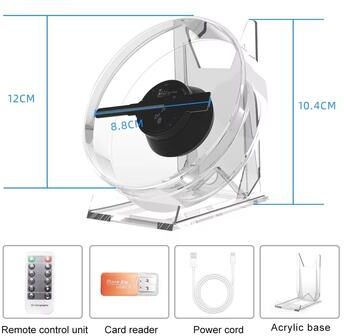
Inspired Finds 4.72in Mini 3D Hologram Fan USB Advertising Display Light 4.72in Mini 3D Hologram Fan USB Advertising Display LightTurn any counter, shelf, or event table into an attentiongrabbing display with this mini 3D hologram fan. Designed to create floatingstyle visuals with a compact spinning LED setup, it adds a futuristic look that feels far more exciting than an...93,99 $*Shipping: 0,00 $Secure redirect to the provider

-
What are the differences between braking to walking speed and braking?
Braking to walking speed typically involves gradually reducing speed until coming to a complete stop, whereas braking refers to the act of slowing down a moving vehicle. When braking to walking speed, the goal is to smoothly decelerate without any sudden stops, while braking may involve more forceful actions to slow down quickly. Additionally, braking to walking speed is often used in situations where a vehicle needs to stop at a precise location, such as at a crosswalk or intersection. **
-
How do you calculate braking time and braking distance in physics?
In physics, braking time and braking distance can be calculated using the equations of motion and the principles of kinematics. The braking time can be calculated using the equation t = v/u, where t is the braking time, v is the final velocity, and u is the initial velocity. The braking distance can be calculated using the equation d = (v^2 - u^2) / (2a), where d is the braking distance and a is the deceleration. These equations take into account the initial and final velocities, as well as the deceleration of the object to determine the braking time and distance. **
-
Is braking a reflex?
Braking can be considered a reflex in certain situations. When a driver reacts to a sudden obstacle or hazard on the road by immediately pressing the brake pedal, it can be seen as a reflexive action. This is because the response is automatic and occurs without conscious thought. However, braking can also be a learned behavior, as drivers are trained to use their brakes in specific situations through practice and experience. Therefore, while braking can be a reflex in some cases, it can also be a learned and intentional action. **
-
What is the formula for braking acceleration and braking time in physics?
The formula for braking acceleration is given by \( a = \frac{v_f - v_i}{t} \), where \( a \) is the braking acceleration, \( v_f \) is the final velocity, \( v_i \) is the initial velocity, and \( t \) is the time taken to come to a stop. The formula for braking time can be calculated using the equation \( t = \frac{v_f - v_i}{a} \), where \( t \) is the braking time. These formulas are used to calculate the rate at which an object slows down when braking. **


What is the difference between a full braking and an emergency braking?
Full braking refers to applying the brakes with maximum force in a controlled manner to slow down or stop the vehicle. This can be done in response to normal traffic conditions or when approaching a stop sign or traffic light. On the other hand, emergency braking is a sudden and forceful application of the brakes in response to an unexpected hazard or danger, such as a pedestrian stepping into the road or a vehicle suddenly stopping in front. Emergency braking is typically done to avoid a collision and requires quick reflexes and a strong, immediate response from the driver. **
What is the difference between braking with a clutch and braking without?
Braking with a clutch involves pressing the clutch pedal while simultaneously applying the brakes, which disengages the engine from the transmission and allows the vehicle to coast to a stop. This method is often used in manual transmission vehicles to prevent stalling. On the other hand, braking without using the clutch means simply applying the brakes without disengaging the engine from the transmission, which can cause the vehicle to stall if the engine speed drops too low. In summary, the main difference is that braking with a clutch allows the vehicle to coast to a stop without stalling, while braking without the clutch can potentially lead to stalling if not done properly. **
Top-Angebote
Products related to Braking:
-
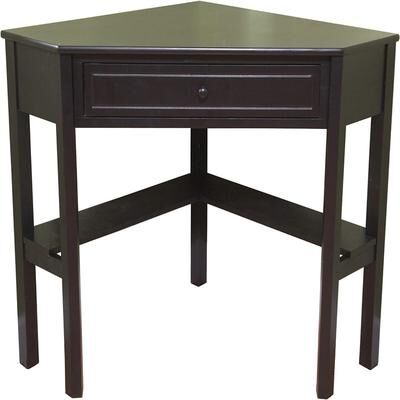
No Marketing Systems Wood Corner Desk"The corner desk measures 42"" X 28"" X 30"" And Weighs 42 lbs. Arrives with only minimal Assembly required. Comfortably fitting in any home, studio, apartment, and office, The small corner writing desk maximizes space in compact rooms."257,04 $*Shipping: 0,00 $Secure redirect to the provider
-
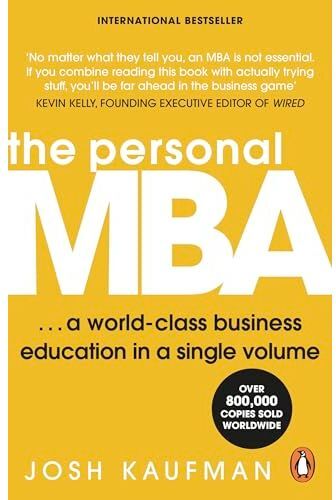
Penguin The Personal MBA: The bestselling business book containing you everything you need to know about marketing, management and leadershipARE YOU TEMPTED TO GO TO BUSINESS SCHOOL? SAVE YOUR MONEY AND READ THE PERSONAL MBA INSTEAD. This bestselling business classic gives you everything you need to transform your business and your career. An MBA at a top business school is an enormous investment in time and cash. And if you don't want to work for a consulting firm or an investment bank, the chances are it simply isn't worth it. The Personal MBA gives you simple mental models for every subject that's key to commercial success. From the basics of products and marketing to the nuances of teamwork and systems, this book distils everything you need to know to take on the MBA graduates and win.10,99 £*Shipping: 2,99 £Secure redirect to the provider
-
Uplift Essentials Elegant Business Digital Wristwatch blackThe Elegant Business Digital Wristwatch is a sophisticated take on the classic electronic timepiece, designed for those who appreciate the precision of a digital display with the refined look of a luxury accessory. Featuring a polished stainless...34,97 $*Shipping: 0,00 $Secure redirect to the provider
-
Various Publishers Day Trading Attention & Dare to Lead by Gary Vaynerchuk & Brené Brown - 2 Book Set - Mixed Format - Marketing & Leadership Business BooksThis two-book bundle pairs Gary Vaynerchuk's Day Trading Attention and Brené Brown's Dare to Lead. Day Trading Attention sharpens your social media marketing instincts for a fast-changing digital landscape, while Dare to Lead builds courageous leadership skills for guiding teams through uncertainty. Together they offer a rounded toolkit for anyone building a brand, a business, or a career, blending practical marketing tactics with research-backed leadership insight. The books are in a mixed format, consisting of hardback and paperback editions, and are brand new.11,99 £*Shipping: 2,99 £Secure redirect to the provider
-
How do you calculate the braking distance, the braking process, and the braking deceleration?
The braking distance can be calculated using the formula: braking distance = (initial velocity^2) / (2 * deceleration), where the deceleration is the rate at which the vehicle slows down. The braking process involves the driver applying the brakes, which causes friction between the brake pads and the wheels, leading to a decrease in the vehicle's speed. The braking deceleration can be calculated by dividing the change in velocity by the time it takes for the vehicle to come to a complete stop. **
-
How do you calculate the braking time and braking distance?
Braking time and braking distance can be calculated using the formula: Braking distance = (initial velocity^2) / (2 * deceleration) Where initial velocity is the speed of the vehicle before braking, and deceleration is the rate at which the vehicle slows down. Braking time can be calculated by dividing the braking distance by the initial velocity. These calculations are based on the assumption of constant deceleration, and may vary depending on factors such as road conditions and the vehicle's braking system. **
-
What are the differences between braking to walking speed and braking?
Braking to walking speed typically involves gradually reducing speed until coming to a complete stop, whereas braking refers to the act of slowing down a moving vehicle. When braking to walking speed, the goal is to smoothly decelerate without any sudden stops, while braking may involve more forceful actions to slow down quickly. Additionally, braking to walking speed is often used in situations where a vehicle needs to stop at a precise location, such as at a crosswalk or intersection. **
-
How do you calculate braking time and braking distance in physics?
In physics, braking time and braking distance can be calculated using the equations of motion and the principles of kinematics. The braking time can be calculated using the equation t = v/u, where t is the braking time, v is the final velocity, and u is the initial velocity. The braking distance can be calculated using the equation d = (v^2 - u^2) / (2a), where d is the braking distance and a is the deceleration. These equations take into account the initial and final velocities, as well as the deceleration of the object to determine the braking time and distance. **
Similar search terms for Braking
-
Various Publishers 22 Immutable Laws Branding, Marketing & Positioning 3 Book Set by Al Ries, Jack Trout & Laura Ries - Paperback Business Strategy ClassicsThis three-book paperback set brings together three influential marketing texts written by Al Ries alongside collaborators Jack Trout and Laura Ries. The collection distils decades of branding and marketing strategy into short, memorable 'laws' and case studies. The set includes The 22 Immutable Laws of Branding, The 22 Immutable Laws of Marketing, and Positioning: The Battle for Your Mind. Ideal for business students, entrepreneurs, marketers, and anyone building a brand, it's a practical, portable reference library that has shaped how the modern business world thinks about positioning, branding, and market leadership.28,99 £*Shipping: 2,99 £Secure redirect to the provider
-
Inspired Finds 4.72in Mini 3D Hologram Fan USB Advertising Display Light 4.72in Mini 3D Hologram Fan USB Advertising Display LightTurn any counter, shelf, or event table into an attentiongrabbing display with this mini 3D hologram fan. Designed to create floatingstyle visuals with a compact spinning LED setup, it adds a futuristic look that feels far more exciting than an...93,99 $*Shipping: 0,00 $Secure redirect to the provider
-
Drop Dash Deals Waterproof Double Sided LED Advertising Light Box Illuminated Sign Board Waterproof Double Sided LED Advertising Light Box Illuminated Sign BoardStep into a brighter way to show off your brand with this premium 1 pc of LED advertising light box that instantly elevates visibility day and night. Designed for business owners, shopkeepers, and event promoters who want their message seen, its...229,97 $*Shipping: 0,00 $Secure redirect to the provider
-
Uplift Essentials Elegant Business Digital Wristwatch goldThe Elegant Business Digital Wristwatch is a sophisticated take on the classic electronic timepiece, designed for those who appreciate the precision of a digital display with the refined look of a luxury accessory. Featuring a polished stainless...34,97 $*Shipping: 0,00 $Secure redirect to the provider
-
Is braking a reflex?
Braking can be considered a reflex in certain situations. When a driver reacts to a sudden obstacle or hazard on the road by immediately pressing the brake pedal, it can be seen as a reflexive action. This is because the response is automatic and occurs without conscious thought. However, braking can also be a learned behavior, as drivers are trained to use their brakes in specific situations through practice and experience. Therefore, while braking can be a reflex in some cases, it can also be a learned and intentional action. **
-
What is the formula for braking acceleration and braking time in physics?
The formula for braking acceleration is given by \( a = \frac{v_f - v_i}{t} \), where \( a \) is the braking acceleration, \( v_f \) is the final velocity, \( v_i \) is the initial velocity, and \( t \) is the time taken to come to a stop. The formula for braking time can be calculated using the equation \( t = \frac{v_f - v_i}{a} \), where \( t \) is the braking time. These formulas are used to calculate the rate at which an object slows down when braking. **
-
What is the difference between a full braking and an emergency braking?
Full braking refers to applying the brakes with maximum force in a controlled manner to slow down or stop the vehicle. This can be done in response to normal traffic conditions or when approaching a stop sign or traffic light. On the other hand, emergency braking is a sudden and forceful application of the brakes in response to an unexpected hazard or danger, such as a pedestrian stepping into the road or a vehicle suddenly stopping in front. Emergency braking is typically done to avoid a collision and requires quick reflexes and a strong, immediate response from the driver. **
-
What is the difference between braking with a clutch and braking without?
Braking with a clutch involves pressing the clutch pedal while simultaneously applying the brakes, which disengages the engine from the transmission and allows the vehicle to coast to a stop. This method is often used in manual transmission vehicles to prevent stalling. On the other hand, braking without using the clutch means simply applying the brakes without disengaging the engine from the transmission, which can cause the vehicle to stall if the engine speed drops too low. In summary, the main difference is that braking with a clutch allows the vehicle to coast to a stop without stalling, while braking without the clutch can potentially lead to stalling if not done properly. **
* All prices are inclusive of VAT and, if applicable, plus shipping costs. The offer information is based on the details provided by the respective shop and is updated through automated processes. Real-time updates do not occur, so deviations can occur in individual cases. ** Note: Parts of this content were created by AI.